
Direct answer
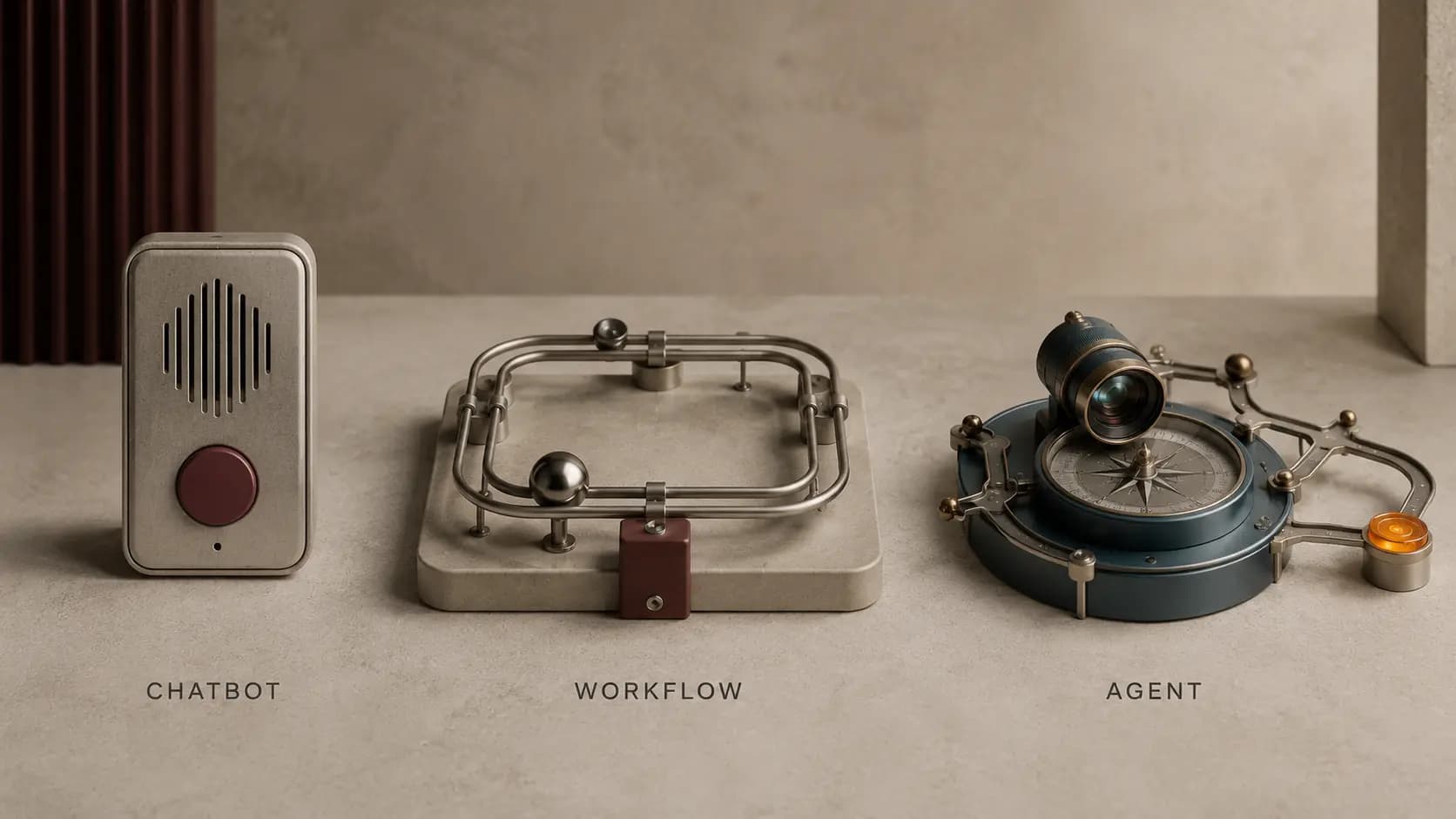
A chatbot holds a conversation and returns answers or hands off. Workflow automation runs fixed steps across systems when a condition is met. An AI agent pursues a goal, may use tools, and works on a task longer than a single reply.
Product pages blur these lines. Buying decisions should not. Otherwise you pay for “agent” branding and receive FAQ logic.
When a chatbot is enough
Chatbots fit recurring questions with a bounded answer set: opening hours, service scope, request status, escalation to a person.
Checks:
- The ten most common questions are known and kept current
- Wrong answers annoy people but rarely create costly damage
- A human handoff is available in a few clicks
A website assistant such as Botinteg sits closer to chatbot and assistance patterns: structure inbound questions, answer common ones, prepare handoff. That is not a back-office agent for every ticket.
What workflow automation does well
This layer is about rules and integrations: create a ticket, update a CRM, send email, request approval. Value comes from reliability and repeatability.
Workflows often fail for process reasons, not model quality. If nobody defines when a lead is “qualified,” you automate contradictions. Write the rule first, then the integration.
What makes an AI agent different
An agent gets a goal and may use tools: check a calendar, look up a record, draft a message, propose the next step. It needs guardrails, logging, and a clear human escalation path.
For inbound calls, Voice Agent is a narrow pattern: take the call, capture information, hand off cleanly. That is different from a FAQ widget.
NIST’s AI Risk Management Framework treats AI risk as context-dependent. For agents that means limited permissions, reviewed outputs, and named owners.
Decision aid
| Need | Better fit | Common failure |
|---|---|---|
| Recurring website questions | Chatbot / website assistant | Stale answers |
| Fixed handoffs between tools | Workflow automation | Fuzzy status definitions |
| Goal-driven work with tools | AI agent | Missing escalation |
| First response on the phone | Voice agent | No after-hours owner |
Start with channel and damage: what happens when automation is wrong? That answer usually beats a feature matrix.
If the next step is not a finished product but AI automation or a narrowly scoped AI agent for your process, start with AI Solutions.
What does not help
Calling a tool an “agent” when it only returns prompt answers without tools or handoff rarely fixes operations. The reverse is also true: not every FAQ needs CRM and calendar access.
Considering whether this approach fits your business? A short conversation can help us assess the process and the open questions.
Discuss the right automation