
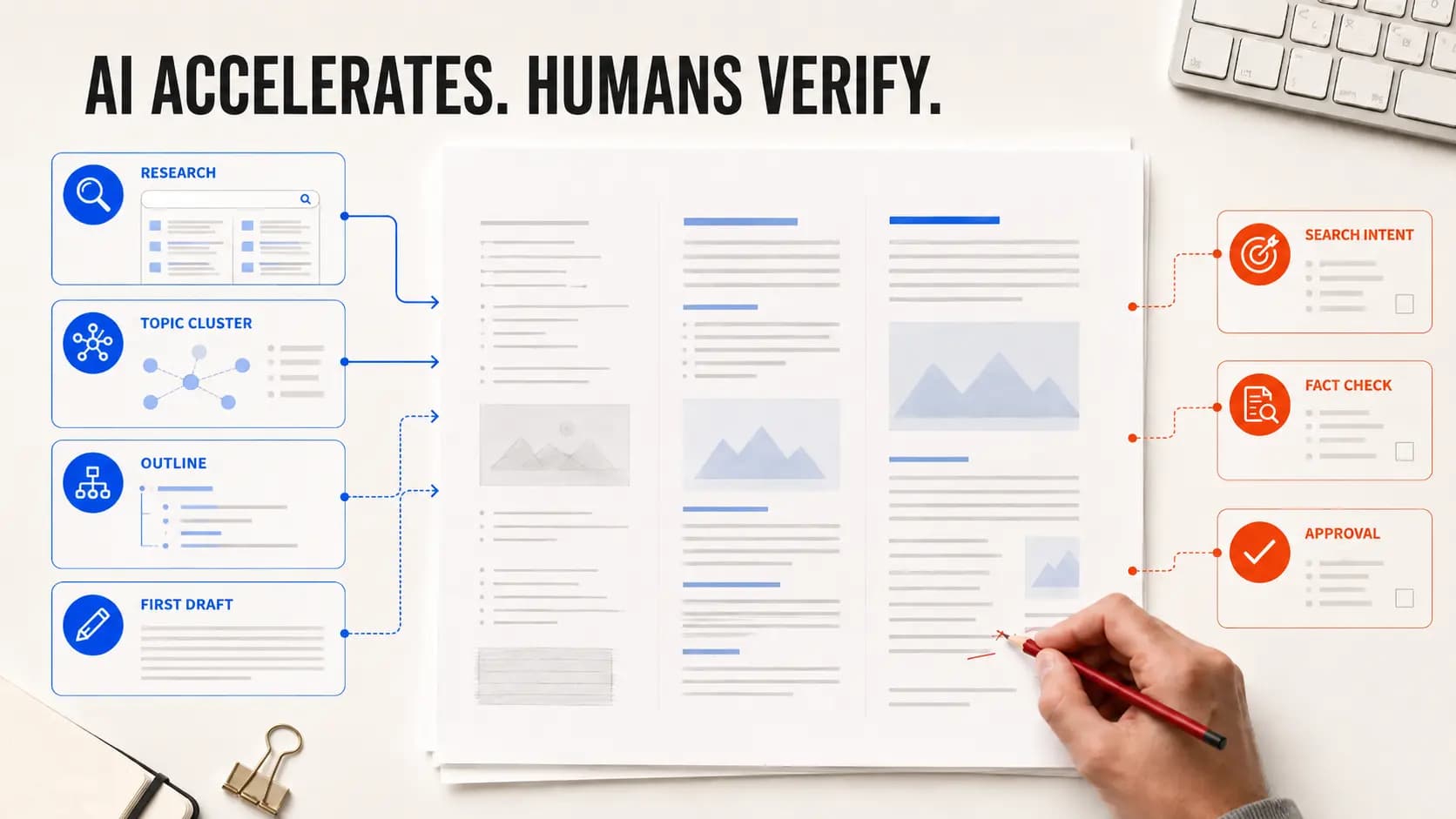
Direct answer
AI helps SEO where repetition and structure dominate: sketch keyword clusters, prepare briefs, draft meta copy, propose alt text. People still need to check search intent, sources, cannibalization, and approval. Automation without review quickly produces pages nobody cites or clicks.
AI vs. human by step
| Step | AI useful? | Human required? | Why |
|---|---|---|---|
| Clusters from existing URLs | yes | review | catch cannibalization |
| Outline for a clear question | yes | yes | check depth and tone |
| Meta title/description draft | yes | yes | CTR and brand voice |
| Facts, pricing, service limits | partial | yes | hallucination risk |
| Internal link suggestions | yes | yes | context and priority |
| Publish | no | yes | approval and timing |
| Post-launch analysis | partial | yes | interpretation and next action |
Google describes helpful content as material that answers a real question and earns trust. AI can speed the draft. It does not replace checking whether the page fits your business.
What automates well
- Raw clusters from existing pages and queries
- Outline options for a clear user question
- Internal link suggestions from a URL list
- Checklists for title, description, and H1
- Diffs and task lists inside an editorial workflow
AISeoQ targets structured SEO work with reviewable steps rather than “content on a button." Drafts yes, approval stays with the team.
For pages meant to drive inquiries, that often pairs with intelligent websites: visibility, content, and inquiry capture are linked.
What must stay reviewed
- Does the page answer a real user question?
- Does it conflict with existing product pages or other articles?
- Are numbers, quotes, and service claims evidenced?
- Is the page measurable after launch (impressions, CTR, conversion)?
When a prompt pushes for “evidence," models invent sources easily. If you lack data, state uncertainty or cut the section.
Typical workflow
- Define the question and target URL
- Check existing URLs for cannibalization
- Generate a draft
- Review facts, tone, and internal links
- Approval by owner
- Publish and watch Search Console
- After 30 days: keep, adjust, or merge
Steps 6 and 7 are part of the workflow. Without measurement, SEO is opinion.
Implementation in the team
Briefing, not prompt roulette. A page needs audience, search question, desired action, and off-limits topics. That lives in the ticket, not only in chat.
One approver per topic area. SEO, subject matter, and legal notes may be different roles, but someone must say “live."
Cannibalization rule. Before a new URL: does the question fit an existing page? Extend instead of duplicate.
Limits
AI does not know your business better than your approval list. It does not automatically know your pricing, exceptions, or regional specifics. The more specific the topic, the more human review you need.
Bulk pages without added value hurt more than they help. Fewer pages with clear intent beat many thin variants.
Pre-publish checklist
- Search intent stated in one sentence
- No conflict with an existing URL in the same cluster
- Facts and service claims verified
- Internal links added, including relevant product or service pages
- Title, description, and H1 read once by a human
- 30-day measurement plan noted after launch
Considering whether this approach fits your business? A short conversation can help us assess the process and the open questions.
Discuss SEO workflow