
Direct answer
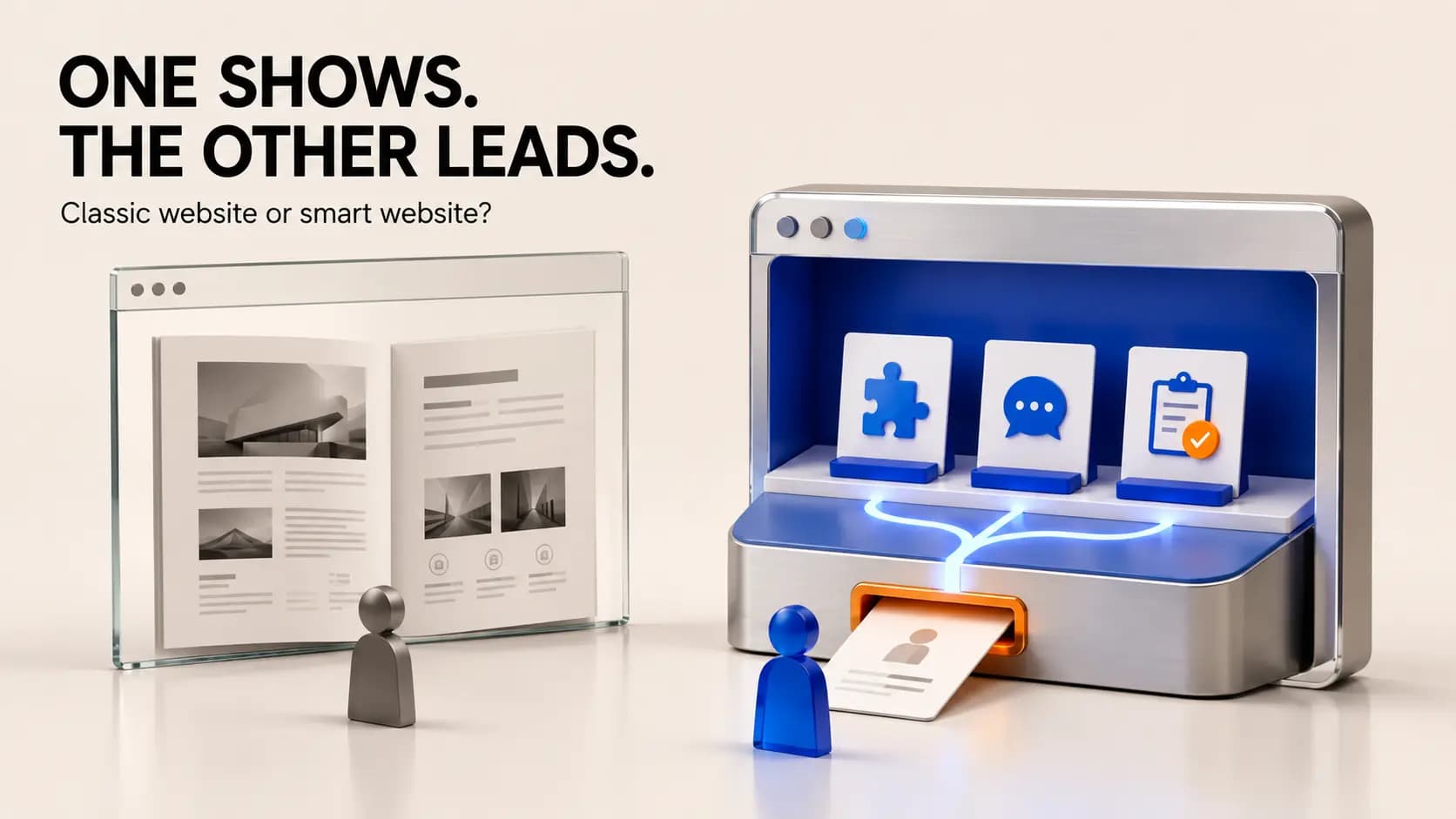
A classic business website presents services, team, and contact details. An intelligent website does that too, then adds local visibility work, structured inquiry capture, and ongoing improvement from search and usage data. Design alone does not make a website intelligent. The real question is whether the site should generate inquiries and whether those inquiries actually reach the business.
Side-by-side comparison
| Aspect | Classic business website | Intelligent website |
|---|---|---|
| Goal | Presence and trust | Visibility plus qualified inquiries |
| Content | Launch, then rarely updated | Regular updates tied to search questions |
| Inquiries | Form or email | Structured paths, optional assistant |
| Measurement | often none | Impressions, clicks, inquiries, response time |
| Effort | one-time to medium | ongoing but plannable |
| Fits when | low traffic, narrow market | local search, repeat questions, team capacity |
What the classic version often does well
- Build trust with references and legal pages
- Explain services at a high level
- Offer a contact email or form
It can be enough when inquiries are rare, the market is narrow, and nobody actively improves the site after launch. In that case, a relaunch with better copy and faster hosting may beat a full system rollout.
What intelligent websites add
TechnoloHit describes intelligent websites as a customer-acquisition system: modern site, local visibility, inquiry capture, and continuous improvement.
In practice that means:
- Service pages that match real search intent, not just keywords
- Clear paths from question to inquiry, with required fields instead of free text alone
- An optional assistant for recurring questions, for example via Botinteg
- SEO workflows that keep changes reviewable, for example with AISeoQ
The website becomes part of operations, not just a digital business card.
When the extra work is worth it
- You lose inquiries outside business hours
- Your services are locally searchable but hard to find
- The team answers the same website questions by hand via email or phone
- Nobody maintains content after launch even though offer and region change
If those pains are missing, a solid classic site may be enough. The intelligent approach pays off when visibility and inquiries need to be measurable.
Limits
An intelligent website does not replace sales work or product quality. It also cannot rank automatically because marketing copy mentions AI. Without measurement and editorial care, the system becomes a business card with more tools.
Technology alone does not fix an unclear offer. If visitors do not understand the service, no assistant fixes that.
Implementation: four questions before you start
- Which three search queries should lead to inquiries? Write them the way customers would ask.
- What happens to an inquiry in the first 15 minutes? Owner, channel, response time.
- Who updates content each month? A name, not “marketing."
- Which metric shows after 90 days that the website is working? For example qualified inquiries per month or share of standard questions answered.
If question 2 has no answer, you are building visibility without reception.
90-day mini checklist
- Top three search queries have dedicated service pages
- Inquiries land in the team in structured form, not only in an inbox
- Unanswered website questions are reviewed weekly
- Search Console or analytics show which pages drive traffic and inquiries
Considering whether this approach fits your business? A short conversation can help us assess the process and the open questions.
View smart websites